Democrats Should Consider House GOP Leader’s Proposal to Reign in Governor’s Vetoes of Legislative Oversight Language
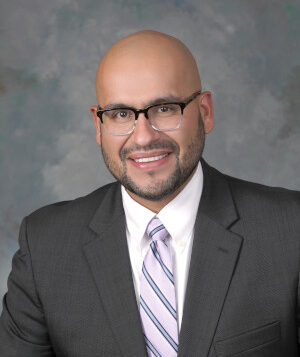
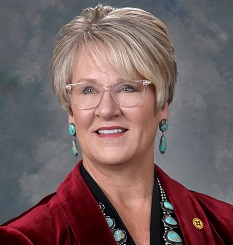
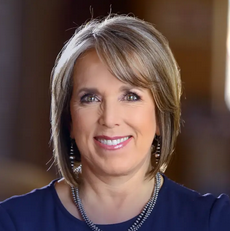
House Republican Leader Gail Armstrong Has Asked the New Mexico Legislative Council Members to Seek a State Supreme Court Review of Governor Michelle Lujan Grisham’s Line Item Budget Vetoes of Legislative Oversight Role and Fund Limits Language.
Editorial
New Mexico House of Representatives Minority Party Leader Gail Armstrong is a seasoned and serious legislator.
While The Candle may have editorial differences with many in her party relative to social, economic, and governance issues and policies, a careful observation of Leader Armstrong’s career informs that she listens and has a keen understanding that government requires people reaching some middle ground – something that needs to happen more often these days.
The House GOP Leader’s Proposal to Challenge the Governor Vetoes of Legislative Oversight, was Eclipsed by Senate GOP’s “DOGE and Pony Show”
That’s why it was unfortunate earlier this month that her party’s leaders in the New Mexico Senate inadvertently upstaged her well thought effort requesting the Legislative Council consider addressing what many legislators believe is an over-reach by Governor Michelle Lujan Grisham into the authority of the Legislature.
A few days before the April 17, 2026, meeting of the Legislative Council, Armstrong and her leadership team sent a letter to House Speaker Javier Martinez and Senate President Pro Tempore Mimi Stewart seeking to place items on the Council’s agenda to discuss possible legal challenges of Executive Branch efforts to limit the oversight and budget-making authority of the Legislature.
(A copy of Leader Armstrong’s letter can be found at the end of this article.)
The Legislative Council is made up of the leadership of both the Democrats and the Republicans of each legislative branch of the state government.
It is a joint committee that oversees the operations of the Legislature – including efforts to guard the powers vested in that body by the State Constitution.
The items proposed by Armstrong were not included on the agenda, apparently being ignored by the Martinez and Stewart.
During the course of the meeting, and before Armstrong could address her concerns, GOP Senate leaders introduced a motion to create what veteran reporter Dan Boyd described in an Albuquerque Journal story about the meeting, as a “…DOGE-inspired interim committee to examine possible fraud and financial abuse in New Mexico state government.”
The Democrats on the Council closed ranks and made clear that they too are concerned about waste, fraud and abuse, but felt existing standing committees were well equipped to investigate and make recommendations for reforms.
And although never spoken, it seemed clear that most in the room thought the GOP Senators’ proposal was politically driven.
Despite the undercurrent of partisanship floating in the room, Armstrong decided to raise the issues laid out in her team’s letter.
She offered, as stated in the letter, that the Council should consider possible litigation to prevent the executive from utilizing dollars in the State Operating Reserve as a funding source for the governor’s hundreds of emergency executive orders issued over the past two years.
The proposal also suggested litigation to end the governor’s inappropriate usage of her line-item veto authority regarding numerous appropriation items within House Bill 2, the General Appropriations Act.
As she wrote in the letter, “Both items are related to the preservation of the Legislature’s power of the purse in that action must be taken to limit the power of the executive branch to spend money without clear legislative authorization and to end the practice of executive line-item vetoes that violate established constitutional principles.”
The second proposal seeks to address what legislators on both sides of the political aisle have complained of for years, as they have seen the Governor veto their oversight budget language requiring state agencies to account for their spending of funds and providing review of performance outcomes.
For instance, on pages 200 and 201, of House Bill 2, the Legislature agreed to an appropriation of $110,000, “For the research, development and deployment fund, contingent on performance outcomes, including research spending, jobs created and business scaling, and including at least forty million dollars ($40,000,000) for quantum initiatives and at least forty million dollars ($40,000,000) for advanced energy initiatives.“
That is a boatload of public money being spent on deals for economic development and a quantum of “promises” of future jobs that some feel is tantamount to corporate welfare.
The Governor took her veto pen and struck a line through the words “contingent on performance outcomes, including research spending, jobs created and business scaling…” effectively usurping serious oversight by Legislative Committees on that spending and the ability to accurately assess, among other things, the effectiveness of the anticipated job creation elements of the spending.
(A pdf copy of HB 2, The General Appropriations Act, or State Budget Bill, can also be found at the end of this article.
As to the use of the State Operating Reserve, Armstrong’s letter noted, “it is our understanding the Legislative Finance Committee (LFC) and the Legislative Council Service (LCS) have taken the position this utilization of State Operating Reserve funds for these executive orders is illegal, since the executive branch had no explicit authority to take such action. Of course, the Department of Finance and Administration disagrees with such an assessment.”
These issues deserve a thorough review, with the possible outcome being the filing of a lawsuit in the State Supreme Court seeking final clarification on what many legislators on both sides of the political aisle feel is a usurping of the Legislature’s appropriation and oversight authority.
That is important, no matter who is the Governor or what political party of which she or he may belong.
The Speaker suggested that the Council staff, including legal counsel will be reviewing the matters Armstrong identified during the meeting and in her letter, and that the Council could bring it up at its next meeting.
It is unclear if the next meeting will be one scheduled for June, or a special meeting called earlier.
Hopefully, thoughtfulness and reasonableness will prevail.
Whether you are a Republican, Democrat or Independent, efforts such as the one brought by Representative Gail Armstrong deserve acknowledgement and support, as they help to create thoughtful governance and accountability – instead of the partisan grandstanding and finger pointing exhibited by those at the both ends of the political spectrum.
House Republican Leaders Letter to House Speaker Javier Martinez and Senate President Pro Tempore Mimi Stewart Seeking to Discuss Legislators Legally Challenging an Over-reach by the Executive Branch.
House Bill 2, The General Appropriations Act of 2026 (FY 2027 State Budget, July 1, 2026 to June 30, 2027.
Governors Written Veto Message Accompanying Line Item Vetoes of HB 2.