After Seven Years of MLG’s Braggadocio, DD Waiver Clients and Families Need an Honest Governor Who Listens to Them
DD Waiver Community Has 42 Weeks to Educate New Mexico’s Next Governor, And Not Repeat the History of the Last Seven Years.
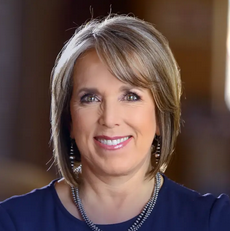
Michelle Lujan Grisham – (D)
Braggarts often exaggerate their experience and accomplishments.
Michelle Lujan Grisham, New Mexico’s Governor for the last seven years and ten weeks, has been known to overstate her administration’s successes – oftentimes doing so with the same type of political swagger and dishonesty of another nationally known politician with a fragile, bigger-than-life personality order.
Take for instance her claims about eliminating the so-called Developmental Disabilities Waiver wait list.
In April of 2022, as she was leaning into her re-election campaign, her press team and the communications team at the New Mexico Department of Health, issued identical press releases, entitled, “Lujan Grisham administration announces end of 35-year ‘Jackson’ lawsuit.”
(According to Disability Rights New Mexico, the Jackson lawsuit was filed “in 1987 to help people with intellectual and developmental disabilities who were institutionalized in state facilities in Los Lunas and Fort Stanton…”)
The press release from the Governor’s teams, quotes her as saying, “While it is remarkably gratifying to finally reach closure in such long-running litigation, the true winners in this case are the vulnerable New Mexicans and their families who are finally receiving the support they deserve,” said Gov. Lujan Grisham.
The press release continued with her quote,
“This issue is one that’s close to my heart. No family should be without the support they need, which is why my administration has focused on fixing the system, including delivering funding to eliminate the waitlist for the Developmental Disabilities Waiver and expanding services. This decision is an affirmation of the importance and success of that work.”
The Governor’s braggadocious claims were exaggerated, disingenuous, and more importantly, they were misleading and hurtful.
The wait list may be “officially” off the books – but clients and their families are still without critical services.
Such absence of critical services was recently revealed during a January 14, 2026, meeting of the New Mexico House of Representatives Appropriations & Finance Committee with members of the Governor’s health team about program budgets, including those affecting the DD Waiver services.
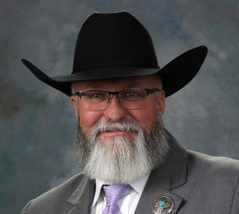
State Representative Harlan Vincent of Ruidoso Downs asked Health Care Authority (HCA) Secretary Kari Armijo if it was true “that there are no willing providers [to] supported living services due to insufficient rates in 15 counties?“
(Supported living services are provided to some of the most vulnerable waiver clients.)
Armijo, a cabinet level manager being paid $241,000/year, responded, “I’m not sure.“
Armijo consulted Jennifer Zwally, the Director of the HCA’s Developmental Disabilities Supports Division (DDSD), who then responded to the Representative’s question: “That is correct.“
Armijo also stated, “I will follow up on that. This is new information to me. I will follow up with Director Zwally, and we will get back to you on what the strategy is.”
It is sad that the Secretary professed she was clueless about such a significant problem, especially as upcoming reporting will show that these types of deficiencies were brought to her attention since she began leading the agency in 2023.
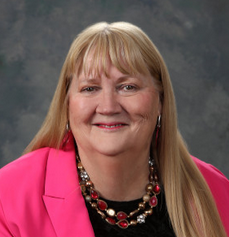
As The Candle reported in 2024, State Representative Liz Thomson of Albuquerque, herself the mother of a son with developmental disabilities, expressed frustration that, while the waiver wait list may have disappeared on paper, in reality people were still not receiving services.
“ … [T]here aren’t services available. You may get a spot on the Waiver, but if there’s no PT [physical therapists – for example] to provide the service, you’re not on the Wait list, but you’re also not getting services. Workforce, once again strikes,” offered Thomson, at a meeting of the Legislative Health and Human Services Committee.
Representative Liz Thomson (D) Albuquerque
Thomson’s appraisal reflects the frustration of many Developmental Disabilities Waiver clients, their families, and guardians of clients.
In the four years since Lujan Grisham’s claim of eliminating the Waiver wait list, more providers of services have been turning down new clients due to the inability to retain and recruit sufficient staff to provide safe care.
And, as to her April 2022 “delivering funding” claim, Lujan Grisham has continued the ongoing, decades old, budget practice of under-funding the programs affecting DD Waiver clients.
And the under-funding has been the rule under Lujan Grisham since she took the reins as Governor in 2019, despite having unprecedented billions in so-called “new money” (general fund revenue) available during her tenure.
As a result, the recruitment and retention of the workforce needed to provide quality and safe care has been seriously handicapped.
Direct Support Professionals (DSPs) are a critical element of that workforce.
DSPs are direct health care givers who perform assistance such as placing feeding tubes for their clients nutrition needs; assisting clients in community activities; administering medication; providing mobility assistance; and assisting in wound care.
Through eight annual budget sessions, under-funded budgets submitted by the Governor and her health agency teams for DDSD programs contributed in keeping the pay to these workers depressed – below what is universally recognized as a living wage.
Fast food workers are paid more to flip burgers than New Mexico pays to turn a client in bed.
As previously reported, women make up about 80% of caregivers in New Mexico – and 73% are people of color.
Inadequate budgets lead to unsafe working conditions, i.e., caregivers being forced to work with an insufficient number of staff.
Such situations are dangerous for the caregiver and the person they are caring for.
Also during her tenure, the Lujan Grisham’s administration looked the other way while allowing a compensation system which encouraged the practice of illegally misclassifying many direct care workers as independent contractors, which essentially denied fair compensation.
The apparent motive of the see no evil approach to the misclassifying of employees was to cut costs of the DDSD budgets.
A group of direct care employees had to file a federal class action lawsuit to gain back unfairly denied wages due to their misclassification as subcontractors instead of employees.
Records regarding the lawsuit exposed an allegation that DDSD was not only aware of the practice, but appears to have encouraged the use of workers so misclassified – eliminating the need to pay overtime.
The leadership at the Developmental Disabilities Supports Division should know that it is illegal to misclassify employees as subcontractors.
The Secretary of the Health Care Authority should know that as well.
And the Governor, herself a lawyer and having served as a federal lawmaker, likely does know that such a practice is illegal.
42 Weeks to Educate New Mexico’s Next Governor How to Meet the Needs of Developmentally Disabled Waiver Clients and Their Families
Michelle Lujan Grisham will exit the Governor’s Mansion and her office at the Roundhouse in a little less than ten months.
Between now and then – over the next 42 weeks – The Candle will offer evidence of just how false and hurtful the claims Lujan Grisham’s administration has made about the commitment to addressing the needs of this very vulnerable group of New Mexicans.
The reporting ahead is not so much an effort to rehash the past for the sake of expressing disappointment.
The effort is not in any way an endorsement of a candidate running for the office of Governor.
It is done to inform the next resident of the Governor’s mansion about the work that needs to be done to fix what has been broken and harmful to vulnerable New Mexicans for four decades – and to displace the perception, from misleading claims, that things are demonstrably better.
It is to make sure that whoever is sworn in as Governor next January, understands that they cannot get away with making empty promises – with treating this community of New Mexicans as second class residents, as has been the case for decades – including the last seven years and ten weeks.